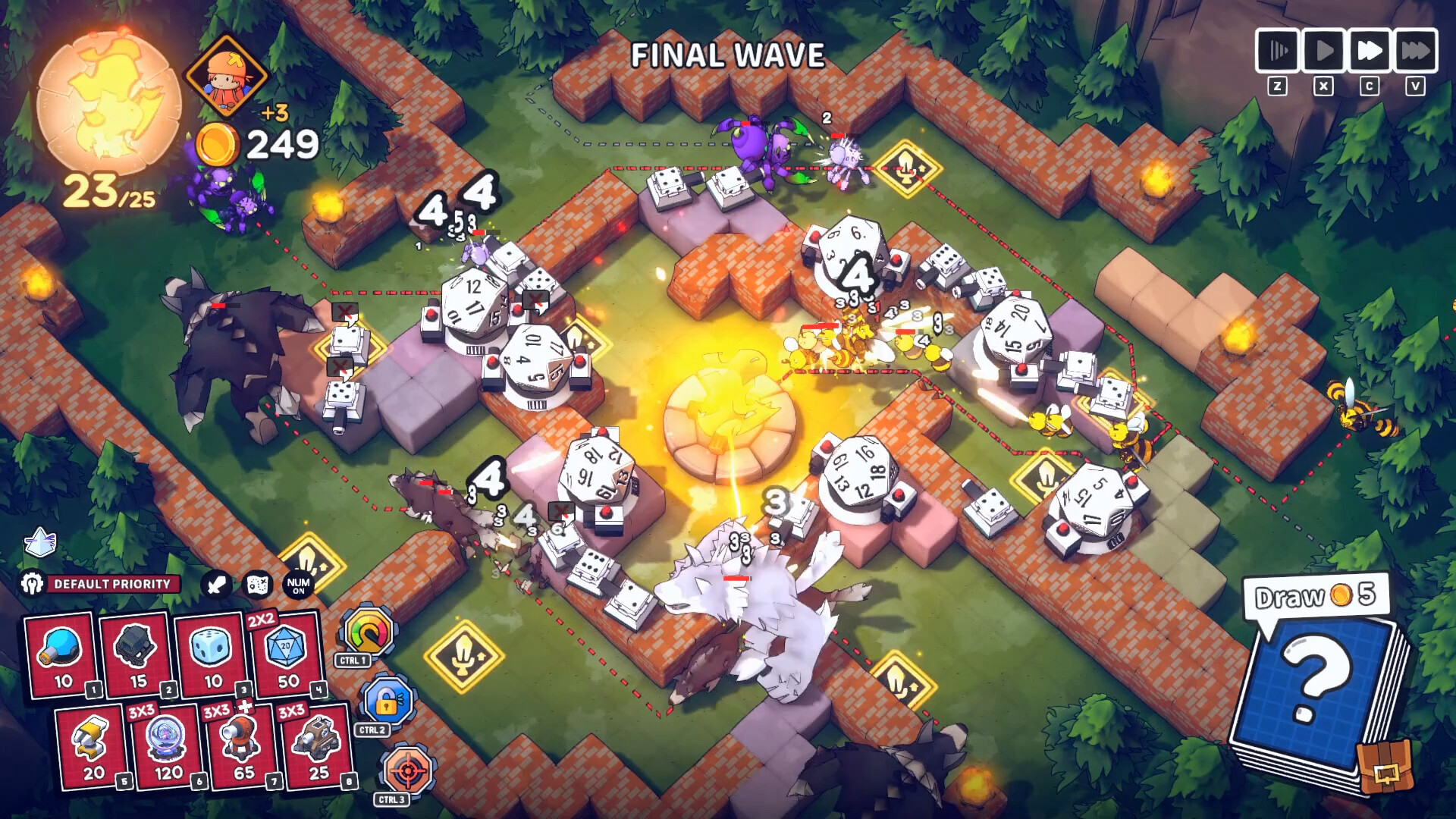
In Emberward, before each battle, you construct a labyrinth with tetromino blocks to make monsters take longer routes and allow for better strategic placement of towers.
This roguelite combines elements of tower defense and collectible cards, creating a tactical experience where each playthrough requires a high level of creativity to overcome challenges. However, some mechanics fail to achieve the necessary balance between reward and difficulty.
Strategic Construction
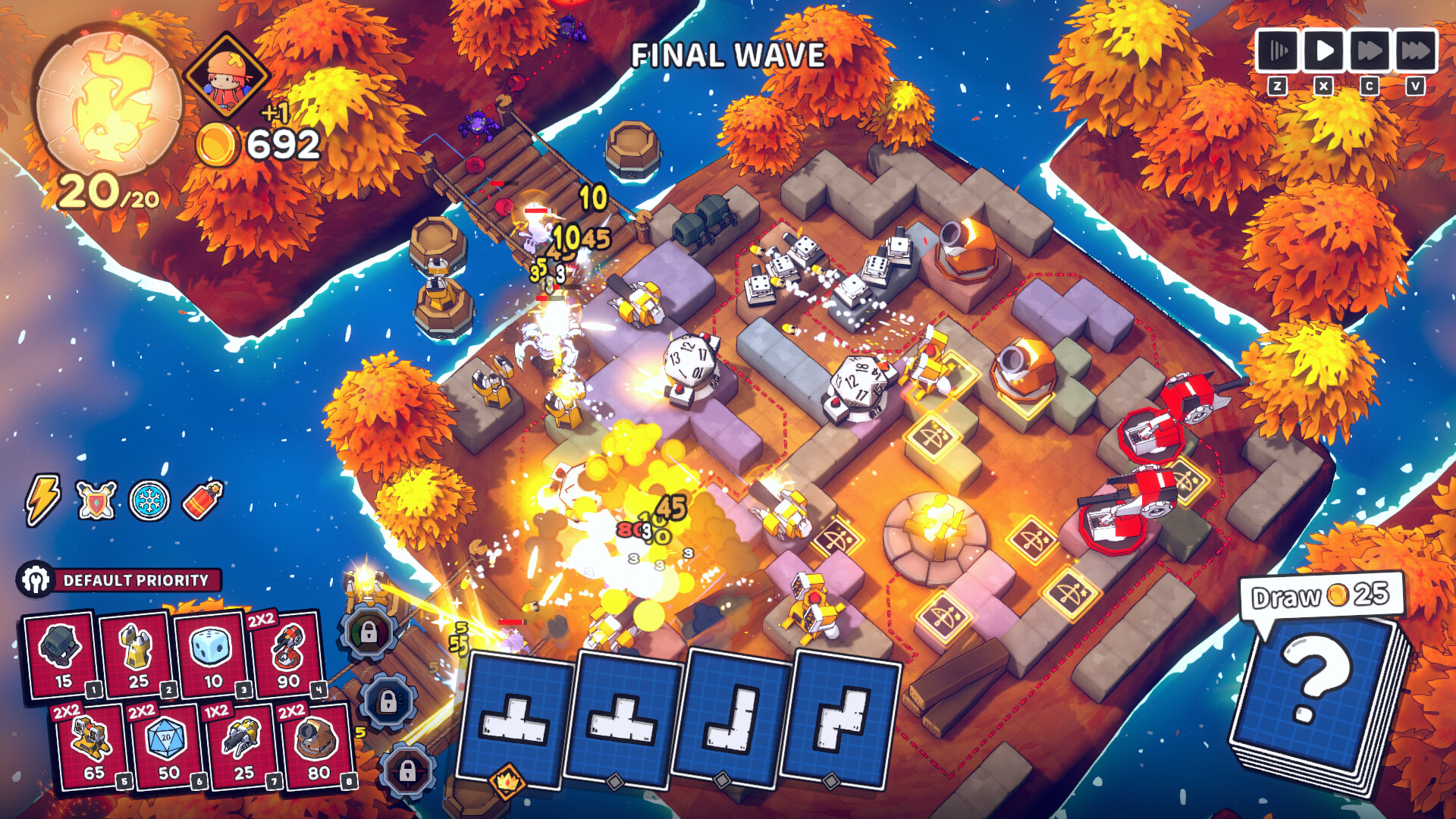
The key rule is that you can add runes to block cards after each battle, improving your towers or granting them special abilities. This mechanic introduces a large number of possibilities and allows for the construction of towers of various sizes (1x3, 2x2, 3x3) to adapt to different situations.
When you optimize your labyrinth construction to the maximum, each playthrough becomes a unique and exciting challenge that demands pure strategy. The rune system is versatile enough to keep repeated plays interesting.
The possibility of customizing towers and blocks is an incentive, but the difficulty curve does not feel fair in some phases.
Uneven Difficulty Curve
While the idea is interesting, some stages of the game feel too easy and do not challenge the player as they should. This can cause a letdown after the initial excitement for the creative possibilities.

Pros
- Innovative mechanics for labyrinth construction
- Rune system that adds depth and strategy
Cons
- Uneven difficulty curve, phases too simple
Verdict
Emberward has an intriguing concept with potential to become a solid strategic experience, but it needs to polish the difficulty curve and offer more consistent challenges as you progress in the game.